

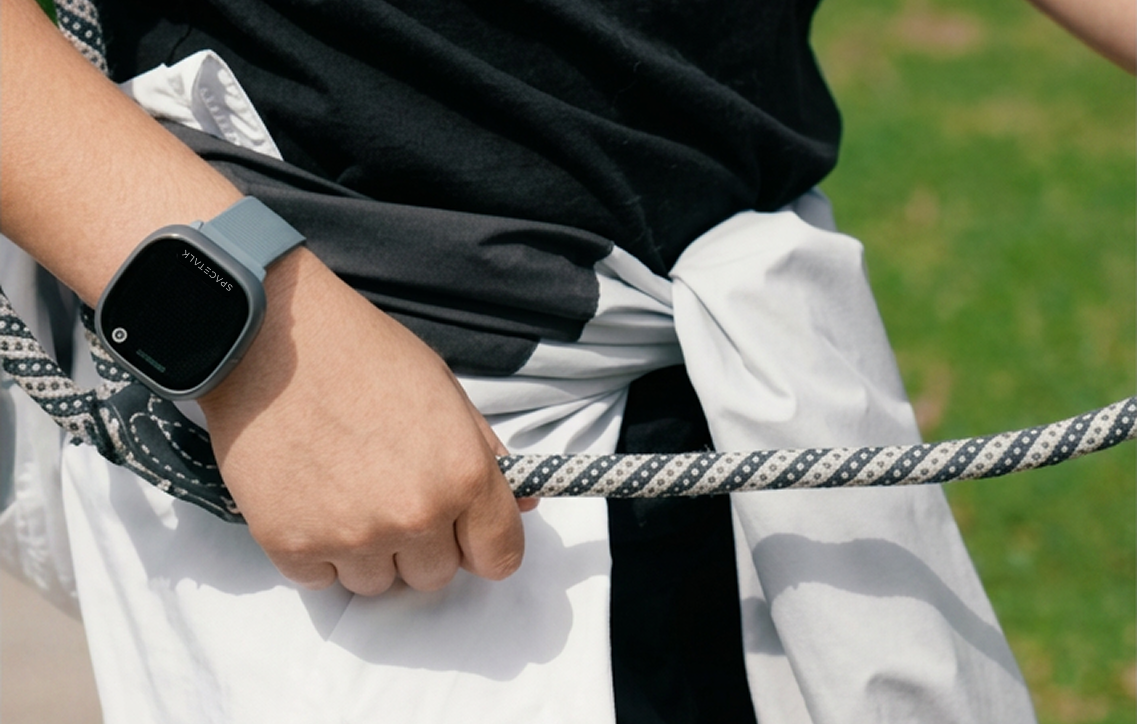
Most parents start thinking about a first smart watch for kids somewhere between Kinder and Year 3. There isn't one correct age stamped on the box. The right time depends on how much independence your kid already has.
Let's walk you through the signs to look for at each age, what actually changes once the watch is on their wrist, and which Spacetalk Watch fits best under the tree this Christmas.
At six to eight, most kids are ready for a smart watch for kids once they're moving around on their own in small, predictable routes. At this age, the watch works best as reassurance rather than a gadget they're glued to.
Because the Spacetalk smart watch runs on its own 4G connection rather than a basic location-only tracker, you get real-time location awareness even when your kid is out of range of a phone or Wi-Fi, which matters most at this age when a fast way to reach them is the priority.
By nine to eleven, most kids are ready for a smart watch for tweens because their world has grown bigger. They're managing their own routine across school, sport, friends, and family commitments, and they want to message their mates the way older kids text on phones, just without the social media or open internet that comes with one.
This is often the age where a full smartphone feels like too much, too soon, while no device at all starts to feel limiting. A watch built for tweens sits in the middle: enough connection for growing independence, without opening the door to social media or an open internet feed.
At twelve and older, most teens are ready to move beyond a kids' watch and towards a Spacetalk Mobile Plan, which keeps the same location awareness and Trusted Contacts setup but opens the door to more phone-like independence as they head into high school.
This stage is less about whether to have a device and more about which one fits a teen's growing world. A Spacetalk Mobile Plan keeps the same family safety platform you already trust, while giving your teen a path towards more independence on their own terms.

Expect a short settling-in period no matter the age, usually a week or two while you and your kid both learn the Spacetalk App together, followed by the watch fading into the background of everyday life.
For ages six to eight, expect to manage almost everything yourself through the App, like creating their Space, adding Places like home and school, setting Routes for the school run, and turning on Check-Ins for the afternoon. Your kid mostly uses one or two buttons on the watch itself.
For tweens aged nine to eleven, expect them to lean on Buddies chat with friends who also wear a smart watch for tweens, and to start checking their own Places notifications without being asked. You'll still manage Trusted Contacts and settings from the App, but expect more questions about how things work and why.
For teens twelve and up, expect to hand over more day-to-day control while you keep oversight through the App, gradually moving towards the independence a Spacetalk Mobile Plan is built for.
If the watch is going under the tree, it pays to activate the SIM and set up the Space a few days ahead rather than on Christmas morning itself. That way, your kid can start wearing and using it the moment they unwrap it, instead of waiting through setup while everyone else is already playing with their gifts.
Spacetalk's range covers kids from about six through to teens, so the right pick usually comes down to age and how much independence your kid has right now.
Wrist size matters as much as age when you're choosing between models, so if your kid is small for their age or on the taller side, it's worth checking the size guide on each product page rather than going by age bracket alone.
Smartwatch bundles are often on sale in the lead-up to Christmas, so it's worth browsing the current range and prices directly at spacetalk.co before you decide.

Explore Spacetalk
Smartwatch · Kids
Spacetalk Adventurer 2
Video calling, Buddies chat, location awareness, and Check-Ins all managed through the Spacetalk App.
Shop nowThere's no universal right age. Most Australian families introduce a first watch somewhere between six and eleven, once their kid starts moving through the day with a bit more independence. Readiness matters more than a specific birthday, so look at how your kid already handles small bits of freedom rather than picking a number off a chart.
Not necessarily. Plenty of families start at six, particularly once a kid begins walking to school or staying at after-school care without a parent right there. At that age, the watch is less about independence and more about a simple, reliable way to reach each other.
Not always. Many parents introduce a watch just before independence increases, such as the start of a new school year or the first time a kid walks somewhere alone, rather than waiting for a request. Starting slightly ahead of the need gives everyone time to settle into the new routine before it's actually relied on.
Love keeping up with Spacetalk?
Add us as your preferred source on Google and never miss a new post, product update or parenting tip.
Teilen:
A Buyer's Guide to Spacetalk Watches for Christmas
How a Spacetalk Watch Helps Without Giving Your Kid a Phone